
Rich & Moist Coconut and Mixed Fruit Traditional Cake
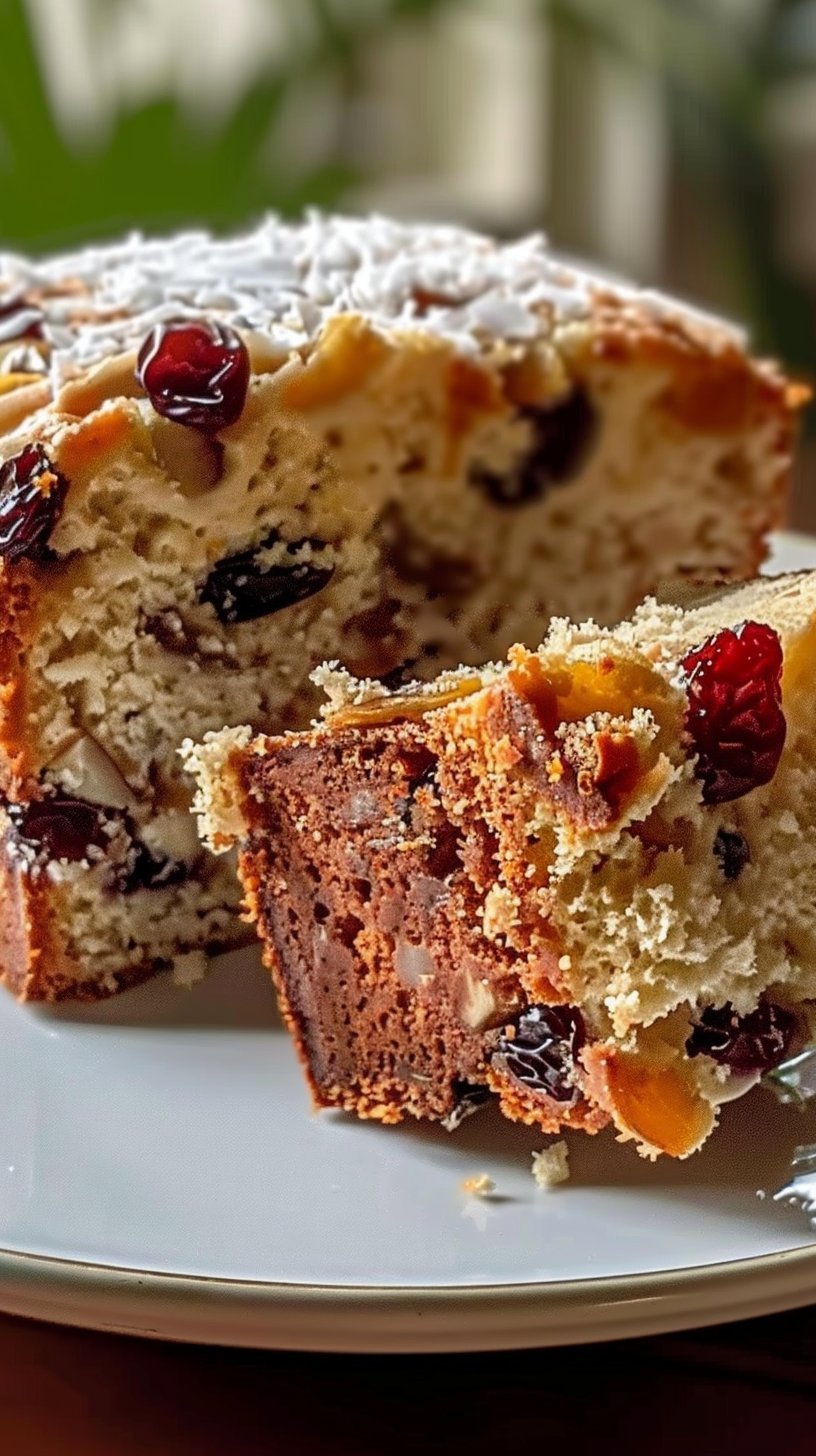
This rich and moist coconut and mixed fruit traditional cake feels like a warm kitchen memory in every bite. Soft, buttery crumb meets tender pockets of mixed dried fruit, while desiccated coconut adds a subtle chew and a tropical whisper. The aroma while baking is comforting and fragrant, with notes of brown sugar, vanilla, and toasted coconut filling the house. The texture is moist but structured enough to slice cleanly, making it a perfect teatime companion or a festive centerpiece for family gatherings. Serve it plain with a cup of tea or coffee, or slice it thinly for gift boxes during holiday seasons. This is an ideal recipe when you want a reliably tender cake that stores well and improves in flavor a day after baking.
Ingredients
- 1 3/4 cups all-purpose flour, the base of the cake that provides structure.
- 1 teaspoon baking powder, a leavening agent to help the cake rise.
- 1/4 teaspoon baking soda, supports rise and balances acidity from yogurt or sour cream.
- 1/4 teaspoon salt, enhances overall flavor.
- 3/4 cup unsalted butter, softened, for richness and a tender crumb.
- 3/4 cup light brown sugar, adds sweetness and a slight molasses note.
- 3 large eggs, room temperature, to bind and add moisture.
- 1 teaspoon vanilla extract, classic flavor enhancer.
- 1/2 teaspoon coconut extract (optional), boosts the coconut aroma if you want it more pronounced.
- 1/2 cup plain yogurt or sour cream, adds moisture and a slight tang.
- 1 cup mixed dried fruit (raisins, sultanas, chopped apricots), provides chewy, fruity pockets and sweetness.
- 3/4 cup desiccated coconut, brings texture and coconut flavor throughout.
- 2 tablespoons flour (for tossing fruit), prevents fruit from sinking to the bottom.
- 1/4 cup chopped almonds or walnuts (optional), adds a light crunch and nutty flavor.
Step-by-step Instructions
- Preheat your oven to 350°F (175°C) and grease a cake pan. Use a 9-inch round or similar size; lightly grease the pan and line the base with parchment if you prefer easier removal.
- In a bowl, whisk together the all-purpose flour, baking powder, baking soda, and salt. This ensures even distribution of the leavening agents.
- In a separate large bowl, cream the softened butter and light brown sugar until light and fluffy. Use a hand mixer or stand mixer for about 3 to 4 minutes.
- Add the eggs one at a time, mixing well after each addition. Scrape down the bowl between additions to keep the batter even.
- Stir in the vanilla extract and coconut extract, if using. Mix just until incorporated.
- Mix in the plain yogurt or sour cream until fully incorporated. The batter will become silkier and slightly looser.
- Gradually add the dry flour mixture to the wet ingredients, mixing until just combined. Do not overmix to keep the cake tender.
- Toss the mixed dried fruit and nuts in the 2 tablespoons of flour and gently fold into the batter along with the desiccated coconut. The light flour coating helps keep the fruit suspended rather than sinking.
- Pour the batter into the prepared cake pan and smooth the top with a spatula for even baking.
- Bake for 45 to 55 minutes, or until a toothpick inserted into the center comes out clean. Start checking at 45 minutes to avoid overbaking.
- Let the cake cool in the pan for 10 minutes before transferring to a wire rack to cool completely. Cooling slightly in the pan helps the cake set and makes removal easier.
Recipe Details
- Prep Time: 20 minutes
- Cook Time: 50 minutes (variable, check at 45 minutes)
- Total Time: 1 hour 10 minutes
- Servings: 10 slices
- Calories: Approximately 400 kcal per serving
Tips, Storage & Variations
- Tips: Bring the eggs and yogurt or sour cream to room temperature before mixing for smoother batter. Do not overmix after adding flour to avoid a dense cake.
- Storage: Store the cooled cake in an airtight container at room temperature for up to 3 days. It will keep moist and may improve in flavor after a day.
- Freezing: Wrap the cooled cake tightly in plastic wrap and then foil. Freeze for up to 3 months. Thaw overnight in the refrigerator or at room temperature before serving.
- Flavor variations using existing ingredients only: Omit the coconut extract for a subtler coconut presence, or increase the desiccated coconut slightly for more coconut texture. Leave out the nuts for a nut-free version, or add the optional nuts for extra crunch.
FAQ
- Can I use a different type of flour?
Yes. This recipe is written for all-purpose flour. Using other flours will change texture and may require adjustments. - Do I have to use both vanilla and coconut extract?
No. Vanilla is recommended. Coconut extract is optional for extra coconut flavor. - How do I prevent the dried fruit from sinking?
Toss the dried fruit and nuts in the 2 tablespoons of flour as instructed. This helps suspend them in the batter. - Can I substitute the yogurt with sour cream?
Yes. The recipe lists plain yogurt or sour cream; both add moisture and a slight tang. - How can I tell when the cake is done?
Insert a toothpick into the center. If it comes out clean or with a few moist crumbs, the cake is done. - Is this cake suitable for gifting?
Yes. The cake stores well and slices nicely for gift boxes or holiday sharing.
People Also Ask
- What is the best pan size for this cake?
A 9-inch round pan or similar size works well to achieve the baking time given. - Can I use fresh fruit instead of dried fruit?
Fresh fruit will release moisture and change baking time and texture, so use dried fruit as directed. - Will the cake remain moist if refrigerated?
Yes, refrigerating can extend freshness but may slightly firm the texture. Bring to room temperature before serving. - Can I toast the desiccated coconut first?
Yes, toasting adds a deeper, nutty flavor. Cool before folding into the batter. - How do I stop the top from browning too quickly?
If the top browns too fast, loosely tent the cake with foil for the remainder of baking. - Are there egg-free options for this recipe?
This recipe depends on eggs for structure; egg substitutes will alter texture and are not included in the recipe. - Can I reduce the sugar in the cake?
Reducing sugar will affect sweetness and texture. Follow the recipe for best results. - Should I soak the dried fruit before using?
Soaking is optional. Use as is for concentrated flavor and chewiness, or soak briefly in warm water or juice for plumper fruit.
Conclusion
I hope this Rich & Moist Coconut and Mixed Fruit Traditional Cake becomes a favorite for your teatimes and gatherings. The balance of buttery cake, chewy dried fruit, and coconut texture is both comforting and festive. For inspiration on other moist fruit cake techniques, you might enjoy this World’s Best Fruit Cake (Moist Fruit Cake Recipe) on A Beautiful Plate, and for a different traditional take, see the Traditional Irish Porter Cake Recipe on Olivia’s Cuisine. Please try the recipe, adapt it to your taste, and share your results with friends and family for a cozy, joyful treat.